 EVERY WITCH NEEDS A WAND! 40% Off Petite Wand Massagers. Shop the Magic!

How to Avoid Overstimulation with Sex Toys (Without Giving Up the Good Stuff)

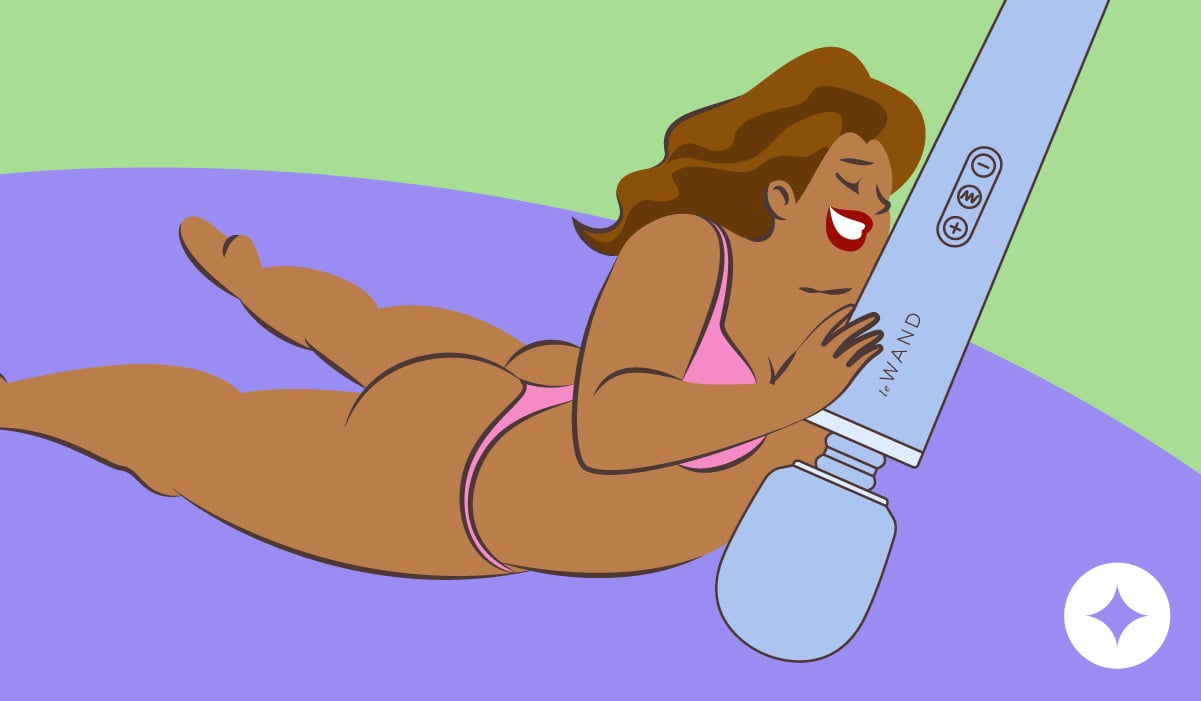
You know the feeling. You’re mid-session, everything was building beautifully, and then… nothing. The spot that was sending electricity through your whole body two minutes ago now feels like it belongs to someone else. Your immediate thought: did I just break something?
You didn’t. And you’re far from the only person who’s had that panicked moment. Overstimulation from sex toys is incredibly common, completely temporary, and – here’s the good news – very preventable once you understand what’s actually happening.
This isn’t one of those articles that tells you to stop using your vibrator. That would be ridiculous advice, and frankly, a waste of good technology. What we’re actually going to cover is how to play smarter so your nerve endings stay happy, your orgasms stay strong, and your favorite toy stays in rotation. All bodies welcome.
What Overstimulation Actually Is (And Why It’s Not Permanent)
Let’s clear this up right away: overstimulation is nerve fatigue, not nerve damage. When you apply intense, sustained vibration to a nerve-dense area – your clitoris, the glans of your penis, your nipples, wherever – those nerve endings eventually get tired of firing the same signal. They don’t die. They don’t lose function. They just need a breather.
Think of it like sitting on your foot. That pins-and-needles numbness feels alarming in the moment, but sensation comes back on its own once you shift your weight. Same principle applies to your genitals. The nerves are fine. They’re just temporarily overwhelmed.
And the research backs this up. A 2009 study published in The Journal of Sexual Medicine surveyed vibrator users and found that 71% reported absolutely no negative side effects. Of the roughly 16% who’d experienced genital numbness at some point, only 0.5% said it lasted longer than a single day. For the vast majority, sensation returned within minutes.
You’ve probably seen the term “dead vagina syndrome” floating around online. It sounds terrifying. It’s also not a medical diagnosis – sex educators have called it out as a fear-based term that says more about society’s discomfort with female pleasure than about any actual clinical risk. Dr. Leah Millheiser, director of the Female Sexual Medicine Programme at Stanford, has been blunt about it: the idea that you could permanently numb your genitals with a vibrator is false.
One important note: if you’re experiencing numbness that genuinely doesn’t resolve within a day, or if there’s pain involved, that’s worth a conversation with your doctor. Medication side effects (especially SSRIs), hormonal shifts, and pelvic floor tension can all affect sensitivity, and those have nothing to do with your toy collection.
Why Your Body Goes Numb (The Actual Mechanics)
Understanding why overstimulation happens makes preventing it much more straightforward.
The biggest culprit is monotonous stimulation: same speed, same spot, same pressure, for too long. Your nerve endings adapt to repetitive input. It’s why you stop noticing the hum of your refrigerator after a few minutes but immediately notice when it stops. Sustained, unchanging vibration triggers a similar adaptation in your genital tissue. The signal just… fades.
Starting at high intensity makes this worse. When you skip the warmup and go straight to maximum power, your nerves have nowhere to escalate to. You’ve burned through all your settings in the first minute, and your body acclimatizes to the ceiling fast.
The type of vibration matters too. Buzzy vibrations – the high-pitched, surface-level hum you get from cheaper toys – stimulate the outermost nerve endings and fatigue them quickly. Rumbly vibrations sit at a lower frequency and penetrate into deeper tissue, which tends to feel more sustainable over longer sessions without that numbing-out effect. It’s one of the most underappreciated differences in the sex toy world, and it’s the single biggest factor in how quickly you’ll hit overstimulation.
There’s also a psychological component that doesn’t get enough attention. When you zone out during a vibrator session – just parking the toy and waiting for the orgasm to arrive – you tend to unconsciously escalate intensity to compensate for fading attention. That escalation cycle is what builds tolerance over time. Staying mentally present during play isn’t just a mindfulness buzzword; it’s genuinely one of the most effective ways to prevent overstimulation.
And for penis owners wondering if any of this applies to them: absolutely. The “death grip” phenomenon – where a tight, repetitive masturbation style reduces sensitivity over time – operates on essentially the same principle. Nerve fatigue from monotonous stimulation isn’t anatomy-specific.
How to Prevent Overstimulation While You Play
Here’s where we get practical. These techniques work regardless of your body, your toy, or whether you’re playing solo or with someone else.
Start Low and Build Slow
Every single sex educator will tell you this, and every single one of them is right. Begin on the lowest vibration setting, even if you “know” you need more. Spend at least three to five minutes there before bumping up.
Here’s why this works beyond the obvious: as arousal builds, your genital tissue becomes engorged with blood, which makes nerve endings significantly more responsive. A setting that felt like almost nothing when you first turned on the toy will feel noticeably more intense after a few minutes of warmup. You’re not being patient for patience’s sake. You’re letting your body’s own arousal amplify the sensation so the toy doesn’t have to do all the work.
Toys with a wide range of speed settings make this much easier. If your only options are “gentle” and “jackhammer,” the gradual buildup becomes impossible. Look for 10+ vibration settings so you can increase in small increments. Pattern modes that cycle between intensities also help, since they build in variation automatically.
Move the Toy Around
This is the single most impactful habit change you can make. Parking a vibrator on one spot and holding it there is the fastest route to numbness. Your nerve endings need variety.
For clitoral stimulation, alternate between direct contact on the glans and indirect stimulation around it – the clitoral hood, the inner labia, the area just above the pubic bone. Circles, side-to-side, light tapping, pressing and releasing. The clitoris extends deep into the body, so stimulating around it reaches the internal structure without overloading the external tip.
For penis owners, the same logic applies. Rotate between the frenulum, the shaft, the perineum, and the base rather than focusing on one spot. Our guide on using vibrators for penis pleasure maps out the specific hotspots and how to work them in sequence.
Broad-headed toys distribute vibration across a wider area, which naturally reduces concentrated nerve fatigue at any single point. Pinpoint vibes are fantastic for precision, but they focus all their energy on a tiny spot and can overwhelm it faster.
Take Strategic Breaks
When sensation starts to plateau or dull, pause for 30 to 60 seconds. Don’t just stop – use the pause to touch other parts of your body. Inner thighs, nipples, neck, lower abdomen. This keeps arousal building through your whole nervous system without overloading one area.
Edging is basically this technique formalized into a practice: bring yourself close to orgasm, back off, let the intensity subside, then build again. People who edge regularly report that it makes the eventual orgasm significantly more powerful, and it naturally builds in the rest periods your nerve endings need.
Use a Buffer When Needed
If even the lowest setting on your toy feels too direct, put a layer between the toy and your skin. Cotton underwear, a soft sheet, or even the palm of your hand work well. This reduces the intensity reaching your nerve endings without cutting sensation entirely. It’s especially useful with powerful wand vibrators where the motor is designed for deep, rumbly output.
Use Lube for External Play Too
Most people associate lube with penetration, but it’s just as valuable for external vibrator use. Lube reduces friction between the toy and your skin, which means less mechanical irritation stacking on top of the vibration. The result is smoother sensation that’s less likely to tip into numbness. Water-based formulas are compatible with silicone toys – always check compatibility before mixing lube types with your toy material.
How the Right Toy Prevents Overstimulation Before It Starts
Toy selection is prevention. The wrong toy for your body can make overstimulation almost inevitable, while the right one gives you the control to avoid it entirely.
Adjustable intensity is the baseline requirement. You need a toy with enough range to start genuinely low and climb gradually. If the lowest setting already feels like a lot, the toy is too powerful for warmup play – though it might be perfect once you’re fully aroused.
Vibration quality matters more than vibration strength. Rumbly vibrations – the low-frequency, deep-penetrating kind – deliver sensation to tissue beneath the surface, which your body tolerates for much longer than the surface-level buzz of high-frequency motors. This is the difference between a toy that gets you there in sustained comfort and one that numbs you out before you finish. Le Wand’s motors are specifically engineered for that rumbly signature, which is one reason sex educators recommend them for people who’ve struggled with overstimulation from buzzier toys.
For beginners or anyone who tends toward sensitivity, a smaller toy like the Le Wand Petite offers a lower intensity ceiling with the same rumbly quality. It’s also under 8 ounces, so your hand doesn’t fatigue during longer sessions – which matters, because hand tiredness leads to pressing harder, which leads to more concentrated pressure, which leads to… you see where this is going.
If vibration itself is the problem, clitoral suction toys offer a completely different pathway. Air pulse technology stimulates without direct contact, which sidesteps the nerve fatigue mechanism entirely. Worth trying if you find vibration consistently overwhelming.
For penis owners who want hands-free options that don’t require sustained grip, vibrating cock rings distribute sensation around the base while leaving the most sensitive areas free. The Le Wand Stroke attachment turns a wand into a stroker, combining vibration with texture in a way that varies stimulation automatically.
How to Reset Your Sensitivity If Things Already Feel Dull
If you’re reading this because overstimulation has already become a pattern – you need higher intensity every time, or orgasms feel weaker than they used to – a sensitivity reset works. It’s not complicated, and it doesn’t mean giving up masturbation.
Week 1-2: Switch your stimulus. Put your go-to toy in a drawer and explore other pathways. Manual stimulation with your hands. A lower-intensity toy you haven’t used in a while. Focus on erogenous zones you usually skip – your Kegel muscles engaged during arousal, nipple stimulation, inner thigh touch. The goal is giving your primary nerve endings a rest while keeping the broader arousal network active.
Week 2-3: Reintroduce gradually. Bring your toy back, but start on the lowest setting and resist the urge to escalate quickly. Spend entire sessions below your usual intensity. You’re retraining your nervous system to respond to less.
Week 3-4: Alternate sessions. Toy one day, hands the next. This prevents your body from re-acclimating to a single type of stimulation. Variety is the long-term insurance policy against tolerance buildup.
Throughout: Stay present. Tune into what you’re feeling rather than waiting for the orgasm to show up. Mindful masturbation sounds like a wellness cliche, but it works. When you pay attention to sensation, you need less intensity to register pleasure.
Most people notice improved sensitivity within one to two weeks. A full reset typically takes three to six. If nothing changes after a month of consistent effort, talk to a healthcare provider – the issue is more likely medication, hormonal, or pelvic floor related than toy-related.
Talking About Overstimulation With a Partner
When someone else controls the toy, overstimulation can sneak up faster because you’re not adjusting in real time. A quick conversation beforehand makes everything smoother.
Agree on a simple signal for “dial it back” – a hand squeeze, a double tap, or just the word “softer.” This saves you from that awkward moment of trying to articulate “the vibrations are too intense on my clitoris” while mid-session. Have your partner start at a lower intensity than they think you need. Checking in verbally – “how’s that feel?” – keeps communication open without killing the mood.
Frame it as a positive, not a complaint. “I want to feel every single sensation” lands differently than “that’s too much.” The goal is collaborative play where both of you are tuned into what’s working, and a toy with a wide intensity range makes it easy for the controlling partner to make micro-adjustments without interrupting the flow.
For more on incorporating toys into partnered play, our guide to sex positions with toys covers angle, access, and toy placement for a range of positions.
Frequently Asked Questions
Can vibrators permanently damage my sensitivity?
No. A 2009 study in The Journal of Sexual Medicine found no evidence of lasting desensitization from vibrator use. Temporary numbness is common and resolves within minutes to hours. “Dead vagina syndrome” is not a recognized medical condition.
How long does vibrator numbness usually last?
For the vast majority of people, full sensation returns within ten minutes to an hour. The 2009 study found that only 0.5% of vibrator users reported numbness lasting longer than a single day.
Should I stop using my vibrator completely if I feel numb?
Pause, don’t quit. Let sensation return (usually ten minutes or so), then resume at a lower intensity or on a different area. If numbness is happening every session, that’s a signal to adjust your technique or try a different toy – not to throw out the one you have.
Does this apply to penis owners too?
Absolutely. The nerve fatigue mechanism is the same regardless of anatomy. The frenulum, glans, and perineum are all susceptible to overstimulation from sustained, high-intensity vibration. The prevention techniques in this guide work for all bodies.
Is “dead vagina syndrome” a real medical condition?
No. Sex educators and medical professionals have consistently called it a fear-based, non-medical term. It reflects cultural anxiety about female pleasure, not clinical reality.
Pleasure Is the Point – Overstimulation Doesn’t Have to Be Part of It
None of this is about using your toys less. It’s about using them better. A few small adjustments – starting lower, moving more, choosing rumbly over buzzy, staying present – keep your nerve endings responsive and your orgasms strong for the long haul.
Your vibrator isn’t the enemy. Monotony is. Vary your play, listen to what your body tells you, and give yourself permission to slow down when the signal says “enough for now.” The benefits of regular solo play are well documented, and overstimulation doesn’t have to be the price of admission.
Ready to explore smarter play? Our guides on wand massager techniques, masturbation techniques for all bodies, and edging with sex toys are solid next steps.