 READY TO GET VIBIN'? FREE Sensual Care with Orders Over $50. Grab Yours!

TL;DR: The A-Spot Explained
- The A-spot (anterior fornix erogenous zone) sits about 2 inches deeper than the G-spot on the front vaginal wall. It feels smooth rather than spongy, and it responds better to gentle, steady pressure than to rapid motion.
- Get fully aroused before you go exploring. When aroused, the vaginal canal lengthens and relaxes, which makes the A-spot significantly easier to reach. Skipping this step is the most common reason people can’t find it.
- The A-spot and G-spot feel different and respond to different techniques. The G-spot tends to produce localized, intense pressure. The A-spot creates a deeper, more diffuse warmth. Both are worth knowing.
- Longer, curved toys make a real difference here. Le Wand’s stainless steel Arch and Hoop are well suited for anterior fornix access, and pairing internal stimulation with external wand vibrator stimulation opens the door to a full blended experience.
- Not feeling much, or anything, at the A-spot is completely normal. Vaginal depth, cervix position, and uterine angle all vary from person to person. No sensation doesn’t mean something is wrong with you or your body.
Read on to learn how to locate the A-spot, techniques for stimulating it safely, how it differs from the G-spot, and why anatomical variation is completely normal.
The G-spot gets all the press. Fair enough, but there’s an erogenous zone sitting a couple of inches deeper that most guides skip entirely, despite being a real source of deep, full-body pleasure for a lot of folks.
That’s the A-spot. Officially, it goes by the anterior fornix erogenous zone (clunky name, straightforward location). It sits on the front vaginal wall, deeper than the G-spot, close to the cervix.
This guide covers the anatomy, how the A-spot differs from the G-spot, step-by-step solo exploration, and the positions that give you the best shot at reaching it with a partner. No experience required. Curiosity is the only prerequisite.
What Exactly Is the A-Spot
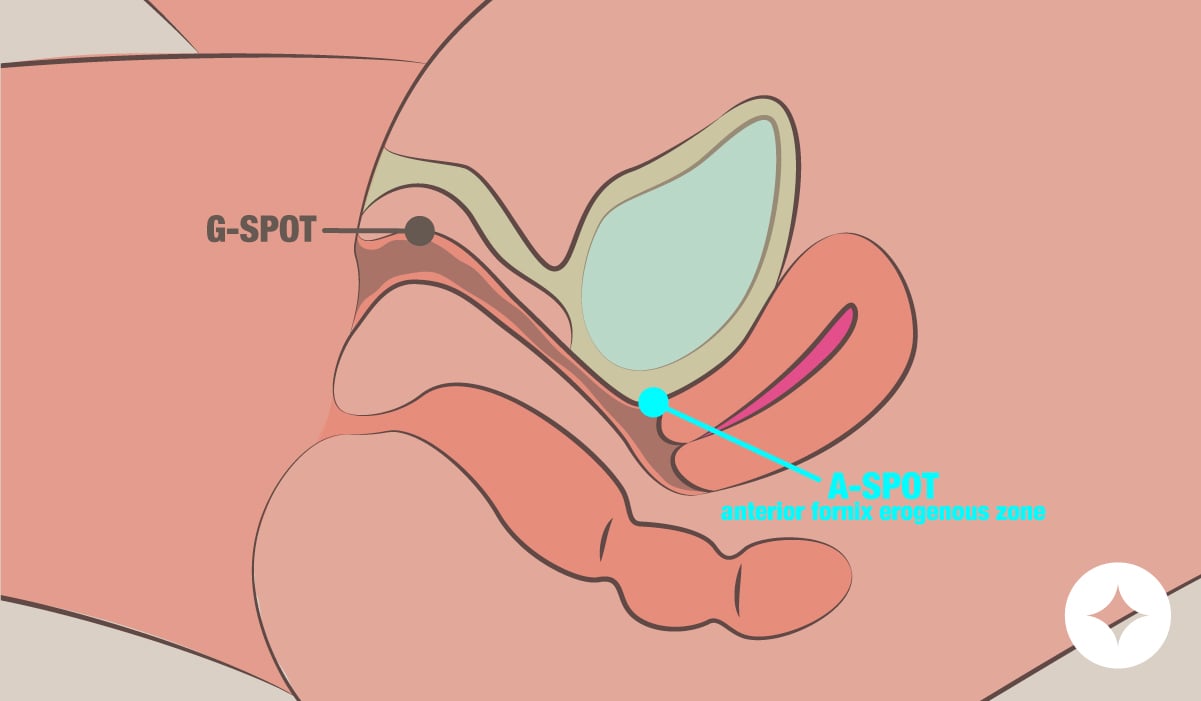
The A-spot sits on the front vaginal wall, roughly 2 inches deeper than the G-spot, in the fold where the vaginal canal meets the cervix. That fold, the anterior fornix, is exactly where the name comes from: anterior fornix erogenous zone, or AFE zone for short. Some people call it the deep spot, which is pretty accurate.
For a broader picture of how everything sits together, vulva anatomy basics is a solid starting point.
One thing that catches people off guard: the texture here is smooth, not spongy. The G-spot, when aroused, typically feels ridged or textured, and that’s your tactile cue that you’ve found it. The A-spot doesn’t offer the same kind of confirmation. What signals you’ve hit the right area is usually a sensation response: deep warmth, a sense of fullness, or noticeably increased natural lubrication.
That lubrication response is actually what led to the original research. Malaysian researcher Dr. Chua Chee Ann first documented the area in 1997, finding that stimulating the anterior fornix produced rapid arousal and lubrication, even in participants who had previously experienced vaginal dryness.
In his study, two-thirds of participants dealing with dryness or discomfort during sex reported real improvement after A-spot stimulation, and 15% reached orgasm almost immediately from stimulation alone.
That’s a meaningful result for a zone that sexology has largely ignored since.
Part of why it stays under the radar is funding: research into female pleasure has historically been underprioritized, and a small Malaysian study from 1997 was never going to become the definitive word on anything.
Not myth. Just underresearched.
How the A-Spot and G-Spot Actually Differ
The confusion usually starts with location. Both sit on the front vaginal wall, but the G-spot is around 2-3 inches inside the vaginal canal, while the A-spot is several inches deeper, close to the cervix.
Same general direction, very different destinations.
Texture is another tell.
The G-spot tends to feel spongy or ridged when aroused, and that slight roughness is a reliable signal you’ve found it. The A-spot is smooth. No textural confirmation, which means sensation becomes your guide instead.
The sensations they produce are also notably different. G-spot stimulation tends to create intense, localized pressure, concentrated and sometimes almost sharp. A-spot stimulation goes broader: a diffuse warmth that spreads through the whole pelvis rather than landing on a single point. Some people describe it as a kind of deep, full-body arousal.
Technique follows from that difference. The G-spot responds well to the “come hither” finger curl, a repetitive, targeted stroke against the front wall. The A-spot prefers slower, gentler contact: steady pressure, a scooping motion, or side-to-side exploration. Rapid thrusting doesn’t do much here. The G-spot stimulation techniques guide covers the full breakdown if you want to compare firsthand.
Access differs too. Average-length fingers can usually reach the G-spot comfortably. Getting to the A-spot often requires longer reach, a specific position, or a toy built for depth.
Neither is better. You can love one, explore both, or find that neither does much for you, and all of that is completely normal.
How to Find Your A-Spot Solo
Start here: get aroused before you do anything else. This isn’t just a warm-up suggestion, it’s an anatomical reality. When you’re aroused, the vaginal canal lengthens and relaxes, which is exactly what creates the space to reach the anterior fornix. Trying to explore while unaroused is like trying to reach a room that hasn’t opened yet.
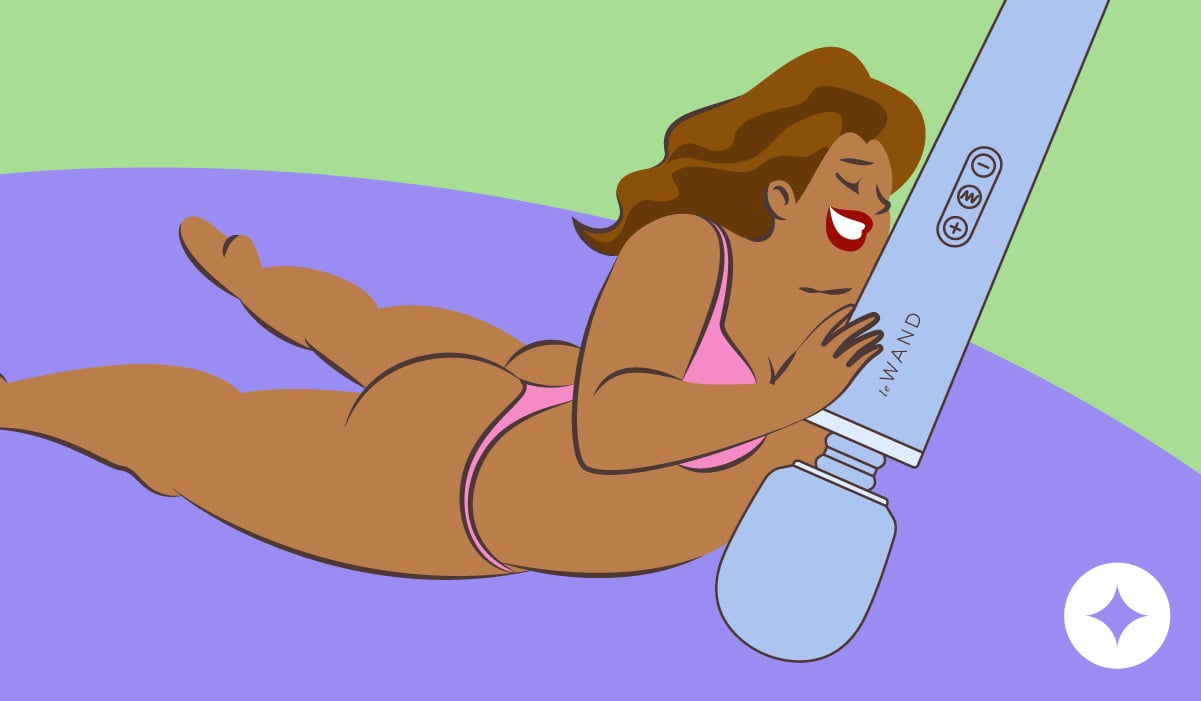
Spend real time on this. Use whatever gets you there, whether that’s external stimulation with a wand vibrator, fantasy, erotica, or all of the above. The Le Wand Petite is a solid choice for warm-up here because the broad head delivers deep, rumbly clitoral stimulation that builds arousal without tiring your hand out before the main event.
Once you’re actually turned on, add lube. A water-based formula works with any toy material and gives you the slip you need for comfortable deeper stimulation. Le Wand’s Natural Water-Based Lubricant is a good option, and the guide to choosing the right lube covers what to look for if you want to compare. Apply more than you think you’ll need. Deep vaginal stimulation dries out faster than you’d expect, and stopping to reapply mid-exploration breaks the momentum.
To explore with fingers, insert two palm-up and reach past where you’d target the G-spot. You’re going deeper than you might expect, several inches in, toward the back of the canal. When you’ve gone as far as you comfortably can, press gently toward the front wall (belly-button side) and try a slow scooping motion or gentle side-to-side pressure. Don’t thrust. You’re not trying to hit a specific button. You’re exploring a general region, and slow, deliberate movement works much better here than speed.
If your fingers don’t quite reach, and for plenty of people they won’t, a longer curved toy makes this significantly more manageable. Look for at least 5-6 inches of insertable length with a forward curve you can angle toward the front wall. Insert slowly, let your body adjust to the depth, then apply that same gentle pressure.
What you might feel: deep, diffuse pressure, a spreading warmth, or a noticeable increase in natural lubrication. Some people experience a whole-body quality to the arousal, different in character from the more localized sensation of G-spot stimulation.
Some people feel very little.
That’s completely common, and it doesn’t mean something is wrong with you or your technique. Vaginal depth, cervix position, and uterine tilt all vary from person to person. The anterior fornix isn’t identically located in every body, and sensitivity varies just as much. If you’re not feeling much, try spending more time on arousal first, shift your angle slightly, or simply come back to it another time. There’s no deadline here. What you’re learning about your body in the process is exactly the point.
Best Positions for A-Spot Stimulation with a Partner
With a partner, position becomes the main variable. Getting to the anterior fornix requires both depth and angle working together: deep enough to reach past the G-spot, angled toward the front wall. Most standard positions don’t naturally deliver both. These three tend to.
Legs-Up Missionary
The receiving partner brings their legs up toward their shoulders, or props their hips on a pillow or wedge. This pelvic tilt naturally directs the penetrating partner or toy toward the front vaginal wall at depth. The higher the hips, the more pronounced the angle, and a firm pillow or wedge makes the position sustainable without muscle fatigue cutting things short.
Doggy Style with a Pelvic Tilt
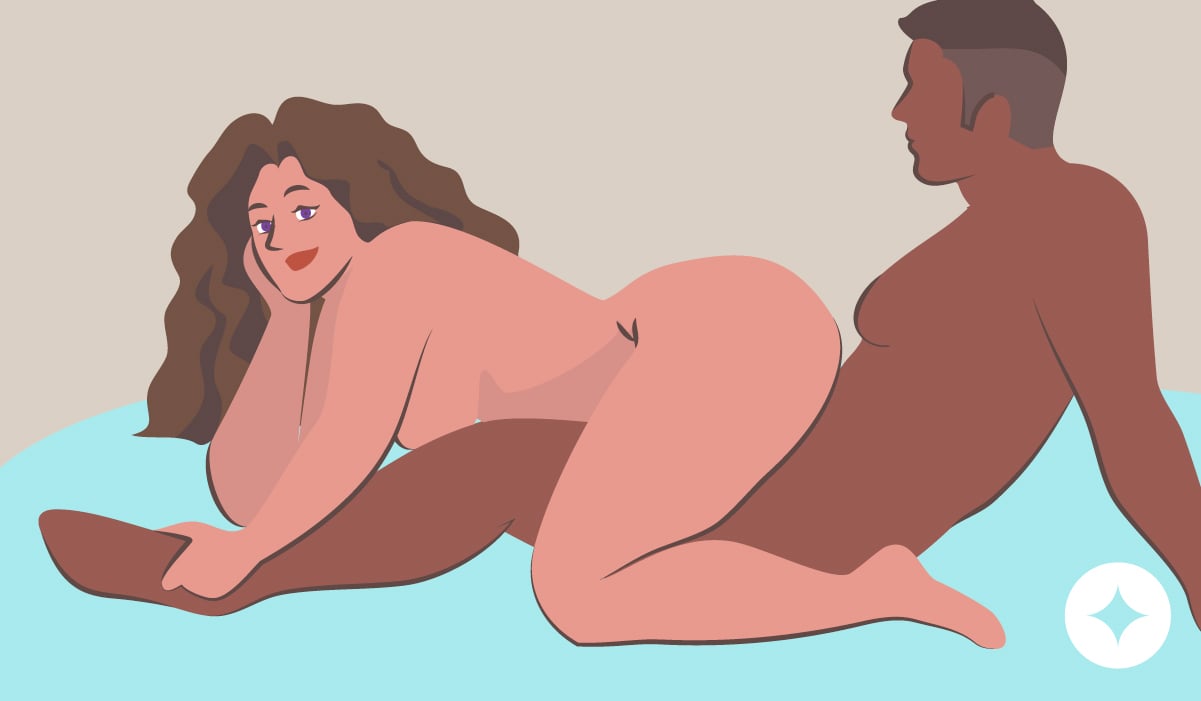
The receiving partner gets on all fours, then drops their chest down toward the bed while keeping their hips high. That arch in the lower back angles the vaginal canal so penetration naturally hits the front wall at depth. The penetrating partner can adjust their angle by shifting their own height or the depth of their thrust. Shallow, angled strokes tend to work better here than deep, straight-on thrusting, since you’re aiming for the front wall, not the back.
Deep Spooning
Both partners lie on their sides, penetrating partner behind. The receiving partner draws their knees slightly toward their chest to open up the angle and create room for deeper reach. Stimulation here tends to be slower and more controlled than the other two positions, less about intensity, more about tuning into where sensation actually lands. It’s also the easiest position for real-time adjustments: a small shift in knee angle or hip position changes the depth and direction immediately, which is useful when you’re still mapping out what works.
Toys That Help You Reach the A-Spot
Toy selection for A-spot exploration comes down to two things: length and curve. Vibration is secondary. What matters most is at least 5 inches of insertable length and a forward-facing curve to angle pressure toward the front wall.
Stainless steel hits both of those marks well. Because it doesn’t flex, you get direct, precise contact exactly where you aim, with no give or deflection. The Le Wand Bow (crescent-shaped, 1.11 lbs of weighted stainless steel) and Le Wand Hoop (curved specifically for deep front-wall access) are both designed for internal stimulation like this. They’re non-porous, body-safe, water-based lube compatible, and can be warmed or cooled before use if you want to bring temperature play into the mix. The full breakdown of why the material makes a difference is in the guide to stainless steel toys.
The A-spot and clitoris are a natural pairing. Holding the Le Wand Original against the clitoris while using the Arch or Hoop internally creates the conditions for a blended orgasm: deep internal pressure combined with powerful clitoral vibration produces a whole-body experience that’s different in quality from either type alone. The Original’s 10 speed settings and flexible neck make it easy to dial in exactly the right level of external intensity while you focus on the internal angle. For a deeper look at what internal stimulation can do on its own, the guide to vaginal orgasms is worth reading alongside this one.
Frequently Asked Questions
Does everyone have an A-spot?
Anyone with a vagina has the anatomical structure. The anterior fornix is consistent anatomy. What varies is sensitivity, which runs the full spectrum from intensely responsive to barely noticeable. That variation doesn’t reflect anything about your body being right or wrong.
Can the A-spot cause orgasm?
Some people experience deep, full-body orgasms from A-spot stimulation. In Dr. Chua’s 1997 study, 15% of participants reached orgasm almost immediately. Others feel strong arousal without orgasm, and others feel very little. A-spot stimulation tends to work best as part of combined stimulation rather than as a standalone.
Is it safe to stimulate the A-spot?
Yes, with adequate arousal, lubrication, and gentle pressure. The anterior fornix is deep but it’s soft tissue, and it responds well to slow, patient exploration. Avoid forceful thrusting without a proper warm-up, and stop if you feel sharp or sudden pain.
Why can’t I feel my A-spot?
Vaginal depth, cervix position, and uterine tilt all affect where the anterior fornix sits and how accessible it is, which is why the same technique can feel completely different from one person to the next. More arousal time, a slightly different angle, or a longer toy often changes things considerably.
Can the A-spot cause squirting?
Some people report fluid release from A-spot stimulation, though the research specifically linking the two is limited. If that’s something you’re curious about, the guide to squirting covers what the research actually says.
Your A-Spot Exploration Starts Here
The A-spot isn’t complicated. It’s just underexplored. You’ve got the anatomy, the technique, and the context. The only thing left is the actual exploring.
Start solo. Working out what feels good on your own builds a map that makes everything else, positions, toys, partnered play, easier and more satisfying once you get there.
When you’re ready to bring a toy into it, the Le Wand Arch and Hoop are built for exactly this kind of deeper reach. Pair them with external wand stimulation and you’re in blended orgasm territory.
If the A-spot doesn’t turn out to be a major sensation spot for you, that’s fine. The G-spot guide is the natural next stop, and there’s plenty worth exploring there too.
Take your time.